
–
-
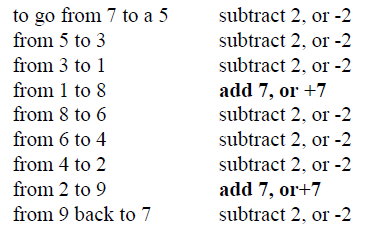
Parallels between Unification Thought and Numbers
Journal of Unification Studies Vol. 14, 2013 – Pages 163-182 In the 2007 edition of this journal I wrote an article with the title “The Yin and Yang of Prime Numbers: Finding Evidence of Unification Thought’s Teachings on the Dual Characteristics in Prime Number Reciprocals.”[1] It provided a rather general introduction to my findings in…
-

Evangelical Mission, Congregational Polity
Journal of Unification Studies Vol. 14, 2013 – Pages 23-50 This article is about growing the number of active members in the Unification Church. It is based on the assumption that church growth has regular causes that can be discerned by examining churches that are growing. The corollary is that church decline also has regular…
-
Battle for the Americas
Journal of Unification Studies Vol. 14, 2013 – Pages 71-106 Note: This article is taken from the author’s forthcoming History of the Cheon Il Guk Era. The first decade of the twenty-first century was a transitional period in Unification movement history. Prior to these years, and even through mid-decade, the movement was solidly unified under…
-

God before Time: Could Physics Reveal that God Emerged by Chance?
by
Journal of Unification Studies Vol. 14, 2013 – Pages 127-144 Following a visit to Vatican City, Stephen Jay Gould[1] wrote that science and religion can be regarded as “non-overlapping magisteria,” in that science deals with facts and theories, whereas religion deals with values and morality, neither supporting the other. In his 1994 book, Crossing the…
-
Sun Myung Moon’s Approach to the Bible
Journal of Unification Studies Vol. 14, 2013 – Pages 1-22 Many Christians suspect that the Unification Church erroneously elevates the authority of its doctrine, the “Divine Principle,”[1] above that of the Bible. But the present writer believes that the Divine Principle, no matter how unique and special it may be construed, is no more than…
-
Paradoxes of Life: Challenges, Responses, and the Meaning of Life
by
Journal of Unification Studies Vol. 14, 2013 – Pages 107-126 From birth to death, life is filled with challenges. One is born into challenges, encounters a series of challenges, and faces death as the final enigmatic gate of no return. In order to cope with these challenges, the so-called positive thinking literature offers various tools…
-
BOOK REVIEW: Bernard Spilka and Kevin L. Ladd, The Psychology of Prayer: A Scientific Approach
Journal of Unification Studies Vol. 14, 2013 – Pages 183-193 The Psychology of Prayer: A Scientific Approach offers a dense yet remarkably useful tour de force through the last 30 years of social scientific research on prayer. It is a major contribution that highlights the expanding role of prayer in the psychology of religion. While…
-
Collision Theory in Developmental Relationship
by
Journal of Unification Studies Vol. 14, 2013 – Pages 145-162 Two ontological themes that have been of concern to philosophy since antiquity concern understandings of permanence and change. Exposition of the Divine Principle [EDP] does not distinguish these, but lumps them all together in its general description of relationship. Through the agency of universal prime…
-
Tipping Point Of Good And Evil: The Power Of Authentic Love In Moral Discourse
Journal of Unification Studies Vol. 13, 2012 – Pages 1-20 Why do good people do evil things? Social psychologists often point to social and environmental forces that entice or pressure people to do wrongs. Those forces include desire for group acceptance, social conformity, and obedience to authority. At the same time, in the individualistic culture…
-
Forced Conversions of Unificationists in Japan: A Continuing Human Rights Violation
Journal of Unification Studies Vol. 13, 2012 – Pages 21-32 The issue of forced conversion (“deprogramming”) in Japan was last addressed in the Journal of Unification Studies Vol. 5, 2003 by Chris Antal. Since that time, several developments have given reason for increased optimism. Although court cases have not always favored the cause of religious…